
McHenry County Criminal Court Cases
McHenry County is Illinois's Twenty-Second Judicial Circuit. Its Circuit Court hears felonies, misdemeanors, domestic-violence matters, traffic cases, ordinance violations, and juvenile matters. Illinois has no separate municipal criminal-court layer, so advice to search a city court misses the local structure. The McHenry County Circuit Clerk keeps the docket and filed court documents. Police agencies keep their own reports and evidence.
Case codes help narrow a result. CF identifies felony matters, CM identifies misdemeanors, DV marks a domestic-violence call, and MX covers miscellaneous criminal business. The code does not tell the full outcome. Open the docket to find the filed counts, later amendments, orders, and final disposition. Felony and misdemeanor labels describe charge classes, while the dated entries show what the court actually did. Traffic and ordinance matters also remain within the unified Circuit Court rather than a separate municipal criminal court.
McHenry Criminal Division Assignments
Criminal work is divided among named court calls at the Michael J. Sullivan Judicial Center. Felony calls sit in Rooms 304 and 302. Room 203 handles the domestic-violence and non-traffic call. Misdemeanor return days are split by arresting agency, a local scheduling detail that can trip up a reader who looks only at the charge class.
Use the clerk's judicial assignments and standing orders to match the case to its current room and call. Assignments can change, so the next event on the docket remains the best source for a specific appearance.
Searching McHenry County Case Records
The Circuit Clerk Public Access portal is the main remote route for McHenry County criminal court cases. A case number is the strongest identifier. Ticket number and defendant name are alternatives, but a common name can return unrelated matters. Court records are also available through the clerk's counter and copy service when the remote view is incomplete.
- Open McHenry County Public Access through the Circuit Clerk.
- Choose case number, ticket number, or defendant name.
- Confirm the case code, filing details, and party before relying on a match.
- Read the charges, events, courtroom, next date, and disposition together.
- Request an ordinary or certified copy for a filing not shown remotely.
| Field Label | Type | Required | Notes |
|---|---|---|---|
| Case Number | Search mode | No | Best exact identifier |
| Ticket Number | Search mode | No | Useful for traffic or citation matters |
| Defendant Name | Search mode | No | Check all case details before selecting a result |
Order McHenry Court Documents
A docket may identify a motion or order without displaying its image. The clerk's copy request service asks for the requester's contact information, case number, party names, document title or filing date, delivery choice, and certification choice. An emailed printed seal is not the same as a raised-seal certification sent by mail.
The first page costs $2, pages two through twenty cost 50 cents each, and later pages cost 25 cents each. Certification is $6 per document. The clerk may add a $6 search charge when the request lacks enough identifying detail. These charges make a precise case number and document date useful.
The Circuit Clerk cannot supply police reports, exhibits, or reporter transcripts through ordinary copy service. Ask the arresting agency for its report. Court Reporting or Court Administration handles transcripts at 815-334-4385.
Inside a McHenry County Case File
A McHenry County court file records what prosecutors filed and what judges did. It is distinct from an arrest report, which describes the agency's allegations, and from an ISP criminal-history response, which links qualifying statewide arrest cycles to reported outcomes. Read the sequence, not one isolated line.
| Case Number and Type | Identifies the matter, division, and filing series. |
|---|---|
| Filed Charges | Shows the complaint, information, or indictment pursued in court. |
| Docket Events | Lists appearances, motions, orders, and other activity in date order. |
| Hearing Details | Gives the next date, assigned judge, courtroom, and call. |
| Disposition | Records dismissal, nolle prosequi, supervision, acquittal, or conviction. |
| Sentence and Balance | Shows the sentence, financial obligations, and related orders when public. |
Read McHenry Criminal Outcomes
Dismissed means a charge ended without conviction. Nolle prosequi means the prosecutor chose not to continue the charge at that time. Acquittal is a not-guilty result after adjudication. A conviction is a judgment of guilt after a plea or trial. Illinois court supervision can avoid a judgment of conviction if completed, but it does not make the file vanish by itself.
A missing outcome can reflect reporting delay or an unmatched disposition. Compare the clerk docket with one's own ISP Access and Review record. If they conflict, use the ISP correction process and contact the reporting court or agency with the exact case and arrest identifiers.
How a McHenry Criminal Case Moves
The court file may begin with a complaint, followed by an information or indictment. An initial appearance addresses custody, counsel, and release issues. Arraignment puts the charge and plea before the court. Discovery, motions, and status dates follow. The matter can end through dismissal, nolle prosequi, supervision, plea, acquittal, or conviction, with sentencing after a guilty judgment.
Case flow: Charges Filed › Arraignment › Pretrial › Plea or Trial › Disposition › Sentencing
Why McHenry Police Reports Differ
The arresting agency writes the incident and arrest narrative. The State's Attorney decides what to file. That is why an initial allegation may not match the charges later shown in the McHenry County criminal court case. The clerk preserves court filings, but it does not become the custodian of the police report simply because a case number exists.
For a Sheriff event, request the report from Sheriff Records. A Crystal Lake, Algonquin, or Lake in the Hills police event goes to that municipal department. Use the court case number and arrest date to connect records kept by different offices.
Public Case, Restricted McHenry Document
A case can be public while one filing inside it remains restricted. The public docket may show that an event occurred without revealing a financial statement, medical record, protected identifier, or victim detail. That is a security rule, not proof that the whole McHenry County criminal court case is sealed.
Start with the public event list. Note the title and filing date of the document that matters. Then ask the Circuit Clerk whether a public copy exists, whether redaction is required, or whether access needs a court order. Do not ask an executive agency to disclose a protected court filing through FOIA. Illinois FOIA applies to Sheriff and police records, while court files follow judicial access rules. If the target is the underlying police narrative, send a focused request to the agency that made the arrest and ask for segregable, nonexempt portions.
This two-track approach prevents a common error. A public court event does not make every source document public, and a restricted document does not erase the visible docket. McHenry County readers should identify both the custodian and the exact record before choosing a request channel.
Case Record Access and Restrictions
Illinois court access follows court rules and clerk procedures, not ordinary agency FOIA in every respect. Adoption, juvenile abuse or neglect, juvenile delinquency, expunged or sealed matters, mental-health cases, and impounded cases are excluded from public copy access. Public cases can still contain restricted documents such as financial statements, medical records, protected identifiers, and sexual-assault victim names.
A blank search does not prove that no event occurred. The name may differ, the filing may be new, the record may be image-only, or lawful restrictions may apply. Ask the clerk to search with an exact case number and explain what copy route is available. The Illinois Courts access policy sets the wider security framework.
McHenry Public Case Images
The Circuit Clerk's online services connect remote users to court access and copy tools. The official online-services page shows where those functions begin.
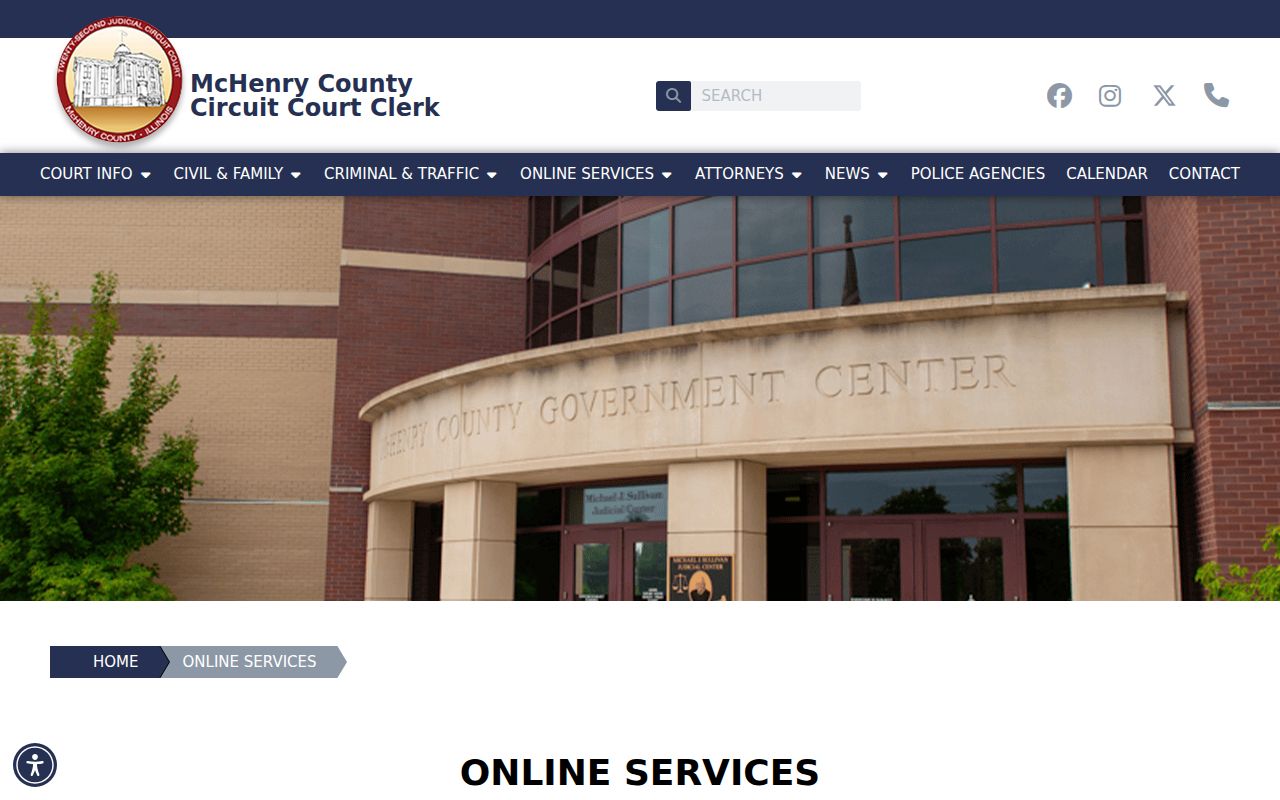
The service image reinforces the key split: search the index first, then use the clerk's copy channel for a needed filing.
The clerk also explains document-copy choices on its request copies page.
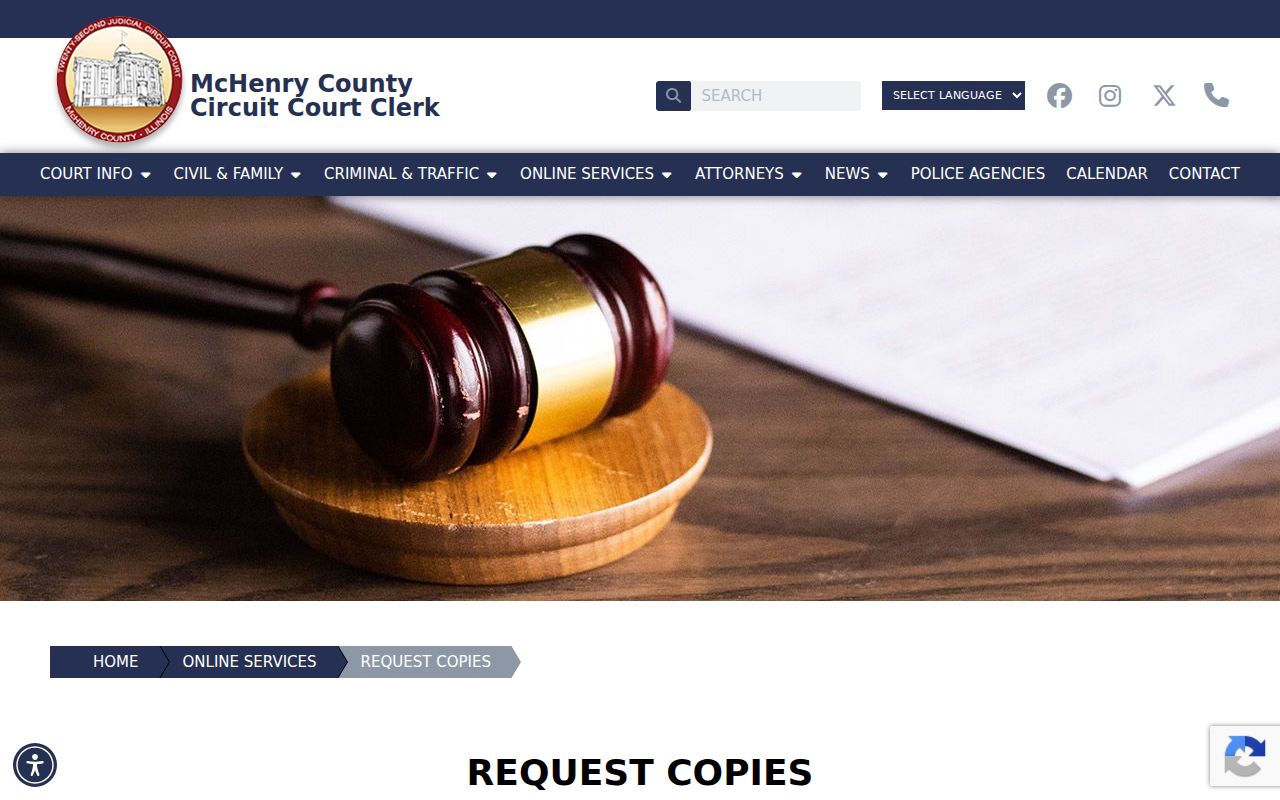
A complete request reduces search time and helps distinguish ordinary, printed-seal, and certified copies.
For eligible record relief, the Illinois State Appellate Defender expungement resource provides state guidance.
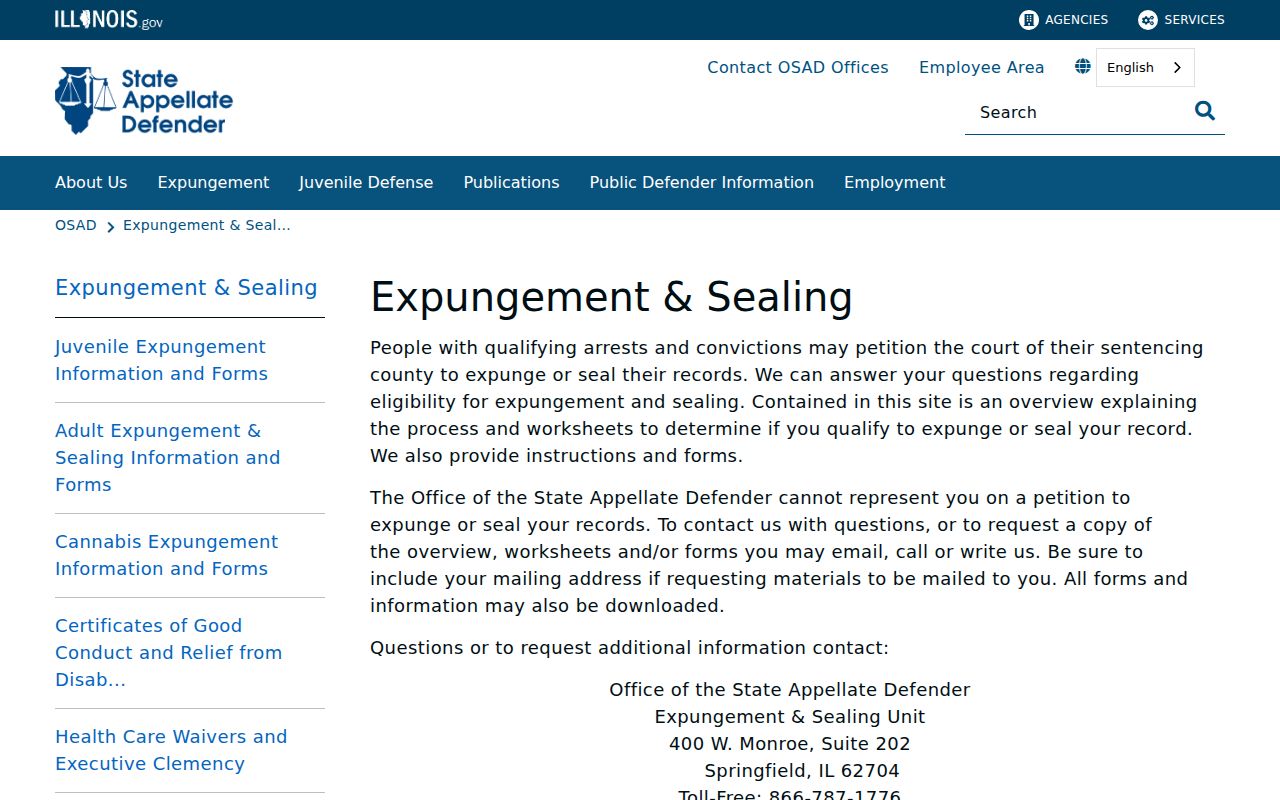
Relief is offense and outcome specific, so a visible McHenry County docket should be assessed against current Illinois eligibility rules.